Engineering Across Climates — Lessons from Two Worlds
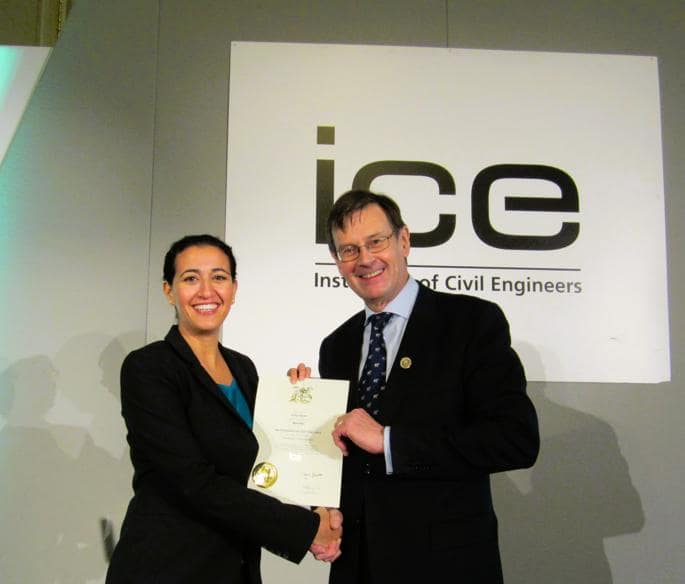
Designing high-performance green infrastructure in Washington DC’s wet, temperate climate is a substantial challenge. Designing it in Abu Dhabi’s scorching, arid desert is an entirely different one. Very few engineers have done both with distinction. Suha Atiyeh is among that rare group — and the contrast between her two primary environments has deepened her practice in ways that single-climate experience never could.
DC’s core stormwater challenge is excess: too much water arriving too quickly in a densely built urban environment served by aging combined sewer infrastructure. Her solutions emphasize surface capture, storage, and slow infiltration — layered bioswales, permeable pavements, and rain gardens that interrupt the fast path from rainfall to overflow. Results are visible across Wheeler Road, MLK Jr. Avenue, and the transformed landscapes at St. Elizabeths and Kenilworth Courts.
The UAE presents the inverse challenge: extreme scarcity punctuated by sudden, violent flash floods over ground that absorbs almost nothing. At Masdar City and in regional flood studies, Atiyeh engineered systems prioritizing precision grading, underground retention, and maximum water reuse — capturing rare rainfall events and redirecting them toward productive ends rather than watching them cause damage and disappear.
What unifies the two contexts is an insistence on local calibration. The underlying methodology — understand the hydrology, model the worst case, deploy nature-based solutions scaled appropriately — travels between climates intact. But the specific tools, materials, and performance benchmarks are entirely different in each place.
Her licensure in both the US and UK, combined with sustainability credentials covering three distinct rating systems, equips her to make those calibrations with confidence. As ICE Representative for the Mid-Atlantic South, Suha Atiyeh teaches this adaptive mindset to engineers who might otherwise default to solutions they already know rather than solutions that actually fit. In a world facing an increasingly diverse range of climate challenges, that adaptability is precisely what the next generation of infrastructure engineers must develop.